12/23/2025
By Kate Stone Lombardi
Published on Substack
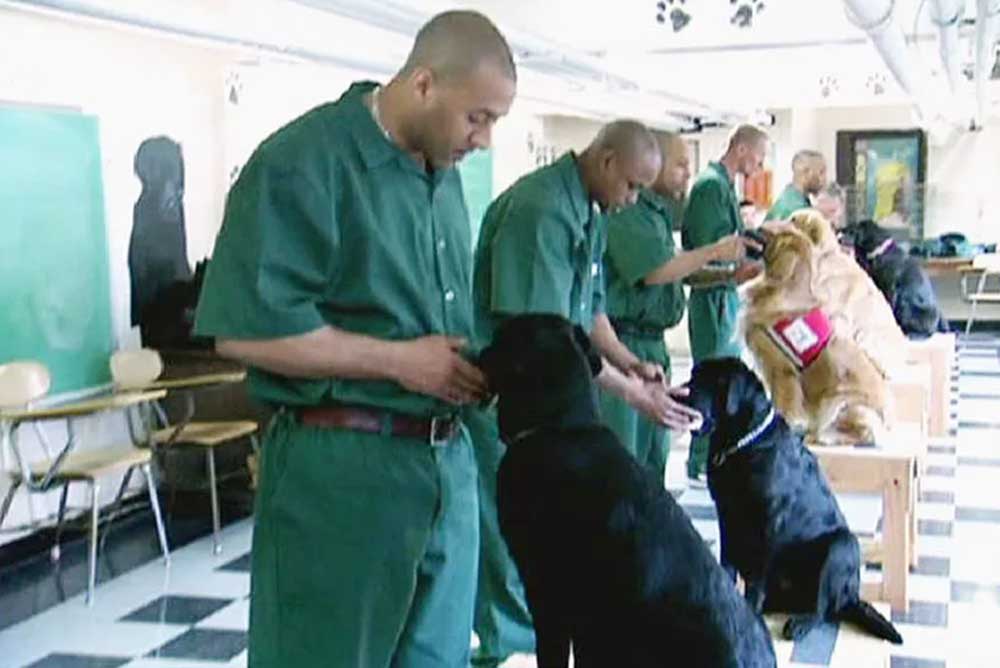
“Inside Out” is the title of the workshop I’m teaching inside a state prison – a combination of personal narrative and journalism. (Check out why I can’t be more specific HERE ) The men write about life on the inside of the prison walls, but – if we can get it published -the work will be seen on the outside.
“Inside Out” is also how I think about writing in general. As someone who’s kept a diary since she was eight, I always thought it was important to get the stuff swimming inside my head out onto paper.
I could play with this term forever. I’m an outsider at the prison, looking in. I bring stories out. Which brings up the ever-present danger of exploitation, and even voyeurism. Ooo – look, this guy is writing about waking up in a hospital, and realizing he’s shackled to the bed. Whoa – who knew that on the street, “Nina” is a nickname for a 9 millimeter pistol?
I get credit for proximity to these men and these stories, but I also get to leave the prison after class, drive home, shower, crawl into my nice flannel sheets and play word games on my iPad. (That’s my de-tox from stressful situations.)
Anyway, this newsletter will grapple with these issues, but sometimes wander into my life outside the prison. Also I’ll include some fun links, just because I love the links I discover in other writer’s Substacks.
So last Tuesday was my second class. I had been sick for four days. I have a two-year-old granddaughter, A, who is in daycare and who I see frequently. Naturally, I catch every single bug that comes down the toddler/daycare turnpike. This one was a doozy – starting with stomach trouble and ending up in the lungs.
My family urged me to stay home. But the longer the day went on, the harder it was to cancel. It’s not easy to get word up there. Plus, I made a compact. You show up for class and I show up to teach it. Part of effective teaching inside a prison is building trust.
So I went, with crumpled tissues sticking out of all my pockets. In the visitors parking lot, I ran into C, the guy I report to at the nonprofit who runs the whole program. They randomly send people to monitor the classes.
Thank God he was there, because he brought some much-needed energy. He led the warm-up and the closing exercises. In a prison, you can’t just expect the men to come in, sit at their desks, and give you their full attention. Who knows what kind of chaos they are coming from? Their days are unpredictable and their environment is dangerous.
C, who himself was once incarcerated, asked the guys how their week was going so far. An older guy said, “Stressful. Just before I came in here, a $^U&^$6& was trying to start something with me. I’m close to the end of my bid. I had to let him know he couldn’t mess with me, but not get into it and ruin my chances of getting out.”
The other guys shook their heads in understanding.
Once we did settle down, I taught the class. The lesson was “Finding Your Voice.” Instead of me reading the chosen article, I now have one or two of the men read it out loud. I’m trying to minimize my own voice in there.
I’d chosen “Mail Call on Death Row in Texas” by Kenneth Vodochodsky, published by the Prison Journalism Project. (I told the class that the author had been on Death Row for four years; but his case was overturned. I wouldn’t have used it if the author had been executed.) You can read Kenneth’s story yourself HERE.
C noted that mail call was a BIG deal in prison. After we listened to and briefly discussed the story, I gave them several writing prompts to choose from. First, was to write about a time that they received mail (or some form of communication) while incarcerated. Another was to write a letter to someone – telling them something that needed to be said. I think letter-writing, an increasingly lost art, is one of the best ways to develop your writing voice. Finally, I gave them the option of writing a letter to their younger selves, offering advice.
As always, I gave them a few mini-writing tips – painting a picture of the setting, the use of detail, using an active voice – that kind of thing.
Speaking of setting the scene, I forgot to describe an essential part of the classroom last week. We had two dogs attend the class! This prison hosts a “Puppies Behind Bars” program, where incarcerated people can train dogs for service work.
R brought in “Lolo,” a black lab who trotted right over, lavishly licked my hand, pink tongue dripping everywhere, and after the third call, finally returned to R and settled down on the blanket R had brought. Later R told me he wasn’t raising Lolo, “just babysitting.”
J brought “Jack” in – a golden lab who must have been in the program a long time, because he was incredibly well behaved, only interrupting the class with his extremely noisy gnawing on a raw hide bone.
Having these dogs in class brings both calm and joy into the room.
The men wrote intensely for 25 minutes. I felt like an SAT proctor of old, when I called out, “Three more minutes” and then “Pencils down, gentlemen.”
D wrote about not getting mail, and returning to the cell block, “shoulders slumped, state-issued boots dragging.”
P wrote a letter to God. “I pray five times a day. But how can I keep faith when there is so much evil in the world?”
I was so glad I had shown up. But by the end of the class my voice was just a croak. And by the time I got home, it was gone. For the next three days I had full-on laryngitis and couldn’t say a word.
But I had to (silently) chuckle thinking that in teaching “Finding Your Voice,” I lost mine. Inside Out.
Here’s some fun links:
Empty Nest Coaches are a thing. Where to start on this one? Please feel free to share your thoughts. I’d like to have this conversation.
Bruce Springsteen’s mom died. I’ve written a lot (including a book) on the mother/son bond. It sounds like Bruce’s mom was a huge and positive influence. And I love the image of Adele Springsteen in her 90s, dancing in the aisles at her son’s concerts.
E. Jean Carroll is amazing, and so are her lawyers. I loved this piece on Roberta Kaplan, especially this paragraph: “Ms. Kaplan, a native of Cleveland, has said that she always knew she would be a lawyer: She was a born talker, sometimes to the exasperation of her family. She once recalled her grandmother telling her when she was young: ‘Robbie, you know I love you, but can you just be quiet for like three minutes?’And I said something like, ‘No, Grandma, I can’t. I just can’t help myself. I love to talk.’” That’s for all the little girls who are constantly told to be quiet.
