08/10/2024
By Kate Stone Lombardi
Published on Substack
“My week sucked,” P said, as we went around the room to check in. “I turned 40 on Sunday.”
“Boy, please,” R said. P is the youngest person in the classroom.
But P continued. “I’ve been in prison since I was 16. I really didn’t want to turn 40 in here.”
“Yeah,” B said, shaking his head. “You’re definitely not going to be getting that sports car.”
R’s week had been good. “I got my first book for college. Anyone ever read ‘Frankenstein’ by Mary Shelley?”
I asked R if this was for an English course. He didn’t know, but P explained, “that book’s for ‘Learning and Thinking.’ The class is like a pedological boot camp.”
Some of the men I’ve taught finished high school on the outside, and others got GEDs while incarcerated. P and B got their college degrees while on the inside. Many of the men attended appallingly low-performing high schools. Before they can begin college-level work, they need remediation.
S was talking about the heat again – “It doesn’t smell too good in the kitchen, but work is work.” Since he’s assigned to the mess hall, he’d tried handing ice out to other men during his shift, but was reprimanded.
The heat was a good segue into the first part of our lesson. Last week, B had told us that he’d had a piece published by the Prison Journalism Project (PJP) on prisons and heat. He hadn’t seen it yet, so this week, I’d brought in copies. B grabbed his and immediately started reading through it.
He was interested in seeing what had been edited out and what had been added. Since B doesn’t have access to the Internet, the PJP has inserted statistics on prison deaths attributed to heat, comments from Department of Corrections officials responding to B’s allegations and the like.
“They changed a lot,” he said.
“Welcome to the editorial process,” I responded.
“Most of the changes are good,” B decided.
“They usually are,” I said. “A good editor is your friend.”
B read his piece to the class and we all applauded. The article was excellent. B had taken my journalism class in the fall, and I’d love to take some credit for his work, but he’d already submitted the first draft of his piece before class started.
“Go ahead,” B joked. “Tell them in your newsletter you taught me everything I know.”
That was about the last laugh of the evening.
The writing lesson was about pivotal moments in memoir, and how they can help structure your work. Some writers build up to a pivotal moment, showing everything that led up to it. Others begin there, and then start filling in the back story. You can also go back and forth, which is a bit more challenging. Most people have more than one pivotal moment in their lives, so a longer memoir will have peaks and valleys.
We used Barrack Obama’s first memoir, “Dreams From My Father” as the writing sample. Obama put his pivotal moment on the third page of his book. He described getting a phone call from an aunt in Nairobi telling him that his father had died.
“Barry? Barry, is this you?
“Yes…Who is this?”
“Yes, Barry. This is your Aunt Jane. In Nairobi. Can you hear me?”
“I’m sorry. Who did you say you were?”
“Aunt Jane. Listen, Barry. Your father is dead. He is killed in car accident. Hello? Can you hear me? I say your father is dead…”
He ends the paragraph this way: “That was all. The line cut off, and I sat down on the couch, smelling eggs burn in the kitchen, staring at the cracks in the plaster, trying to measure my loss.”
S was briefly confused – Barry Obama? Was that the same as President Obama? Yes, that was what some people called him.
The prompt was to write about a time when you got news that changed your life. It could be a letter, a phone call, a text or conversation – even one that was overheard.
I told the guys this was not meant to be a prompt to talk about the moment they were sentenced, nor did their writing need to have anything to do with prison. And they begun writing.
Everyone except P wrote about losing a parent, including me.
S was the first to read. He began with the exact day and the exact time of his pivotal moment. He was working on fixing the wiring in headphones – a prison job. He’d not been feeling right since he woke up; he just had a weird sense of unease. He was approached by a corrections officer who told S to report to the chaplain’s office.
A callout to the the chaplain’s office in prison is never good news.
“I knew,” he wrote. “The last time I heard from my Mom she was fine. She said she was coming to see me soon, and she was going to bring me food. She told me to stay out of trouble. But something inside of me told me she was gone.”
The chaplain was in the middle of eating when he gave S the official news. “You think he could have put down his food but he kept eating. No compassion. That was the hardest day of my life. I was no longer a mother’s boy. I grew up. It’s been 16 years but the hurt is still there.”
Next it was B’s turn.
“My parents are divorced but they had a decent relationship,” he wrote. “My mom had visited. She asked, ‘Did you talk to your Dad on his birthday?’ I told her no, I couldn’t use the phone. There was a crazy long line.”
A few weeks later, B was in the hallway and saw a chaplain walk by. “It was the Protestant chaplain. I didn’t know him. I’m Catholic. I got called in. He had a heavy accent. I had a hard time understanding what he was saying. I hadn’t seen my Dad since the day I was sentenced to life. The day someone I love…”
He stopped. B couldn’t keep reading. He was crying. “I’m sorry,” he said. “This is the first time I’ve tried to write about my Dad’s death.”
The room was quiet. P said, “Yeah. There’s such an incredible sense of powerlessness.”
R added, “I feel you, man. I sympathize.”
He read next. “I can clearly remember when I got the chaplain call out,” R wrote. “My oldest sister was on the phone. She says, ‘Yeah, it confirmed. Mommy dead.’ My legs went out from under me. I couldn’t talk. I was in tears. It hit me like an airplane flew into me. Like a planet fell on me.”
R went on to say that during the time he’s been incarcerated, his mother died, his grandmother died, his aunt died, and her son – his cousin – got shot in the head. He added that in prison, he’d run into someone from his old neighborhood and asked after a guy they both knew. “And he says, ‘Nah. He’s gone.’” (Gone as in dead.)
The men told me that when you’re incarcerated (at least in the state where I teach), and a close family member is dying or dies, you are given a choice to attend the death bed or the funeral, but not both.
R was given an hour to attend his grandmother’s funeral. But the corrections officer who escorted him got them there an hour early, and the funeral parlor wasn’t even open. Someone saw $ outside and called his family, and they came over early to see him. Except his brother.
“My brother, he also got 25 to life,” R wrote. “They didn’t want us there together. I was supposed to go at the beginning and he got the end.”
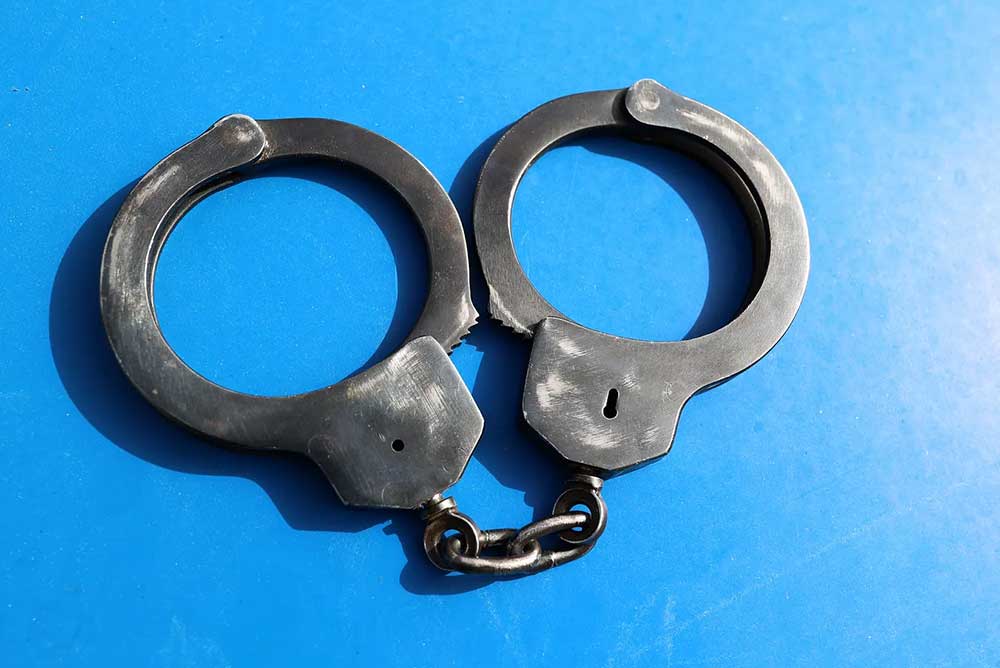
R added that his nephew had photos from that day, “and there I am, in shackles and cuffs.”
“Wait,” I said. “You had to go to a funeral in shackles and cuffs?”
“Of course.” The other guys seemed amused by my ignorance.
I thought about the piece I’d just written about my father’s death. How could I read it to these men? What was heartbreaking for me would have been a luxury for them. I was there while my dad was sick. I was there while he was in the hospital. I was there when he came home for hospice care. I was there when he died.
No matter how much I try to be conscious of my privilege, this was the first time I understood that privilege extends even to death.
I told them why I didn’t want to read what I’d written.
“Grief is grief,” P said. “Read. And don’t make me have to tell you again that you are part of the group.”
This was our last class. I shook hands with each man. Everyone was subdued.
“We probably won’t see you again,” B said. “We’ll get transferred by the time you get back. If you come back.”
“Or maybe be out,” P added.
I couldn’t promise I’d be back anyway. I don’t control my own schedule of where I teach. I go where I’m sent.
After class, I stood outside the building with a corrections officer. We were waiting for another teacher to come out, so the guard could escort us to the gate together. The sun was setting over distant mountains. If you set your gaze above the rolls of barbed wire, it was picturesque.
The day had been hot and humid, but during class there’d been a thunderstorm. Honestly, the class had been so intense, I’d barely noticed it. Now the temperature had dropped and there was a cool breeze. The men in the class filed past, also escorted, to head back to their housing units. I watched them go in their baggy uniforms, shoulders slumped, as the sun dropped behind the hills.
Not one of them looked back.
